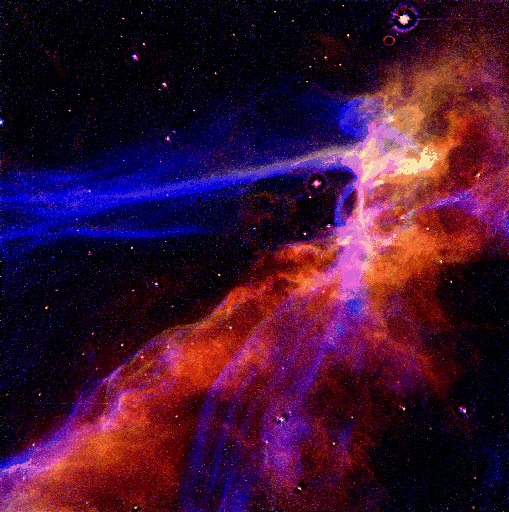
Rampaging Fronts of the Veil Nebula
J. J. Hester (Arizona State University), WFPC, HST, NASA
A supernova explosion of a high-mass star results in fast moving blast
waves. At the front of the waves shown above, ionized gas in the
Veil
Supernova Remnant rushes out from the explosion, sweeps up material, and
breaks up many atoms into constituent ions and electrons.
Observations with
the Hubble Space Telescope
in 1993 indicate that the blue shock wave was
catapult away from the stellar explosion after the red shock wave and has
yet to catch up to it in some regions. The Veil supernova remnant's has a
very large angular size - six times the diameter of the full moon - and
different parts of it are known as the
"Cygnus Loop" and catalog numbers
NGC 6960, NGC 6979, NGC 6992, and NGC 6995.